
What Does It Mean To Go Back?


How do we reclaim our most painful moments?
Not erase them. Not pretend they didn’t happen. But take them back. Rewrite them. Decide they belong to us instead of the other way around.
I’ve been considering this ever since Tyrese Halliburton’s absence in Oklahoma City last week.
For those that don’t know the backstory, I’ll quickly set the stage.
June 2025. Game 7 of the NBA Finals. In Oklahoma City. The brightest lights. The moment every player dreams of. He was playing beautifully. Confident. Loose. Fully himself. He was in the midst of the most remarkable season of his career, emerging as one of the league’s brightest stars, one win away from a championship. And then, seven minutes into the game, he fell.
A torn Achilles.
All injuries are terrible. But this one felt different. It came in the middle of something beautiful. In the middle of momentum. In the middle of a story that was still being written.
It ended his night. It ended their title run. And it sidelined him for the entire season we’re watching right now.
Fast forward to last week, Tyrese is seven to eight months into his rehab journey. Even though he’s out for the entire year, he’s been traveling with his team to every single game. Staying present, visible, and strong in his leadership.
But on Friday night, the team returned to Oklahoma City for the first time since that painful Game 7.
And Tyrese Haliburton wasn’t there. The only game he’s missed all season.
We had a show that night, so I texted him and asked if he would be open to telling me why he wasn’t there.
He wrote back (with consent for me to report)
“I just don’t think I’m ready to go back there yet. Something I still think about for sure. I’d like the next time I go back to be when I can play and get lost in competing and playing the game I love, rather than staring at that spot on the floor the whole game.”
He didn’t owe anyone that explanation. He could have said scheduling. Rehab. Logistics. Anything neat and professional and empty…but that kind of answer he gave is rare. Not because the feeling is rare, but because admitting it is. We reward athletes for being unbreakable. We build entire myths around their ability to override pain. We don’t often make space for the version of them that is still negotiating with it.
His honesty felt like a small rebellion against that expectation. A reminder that the bravest thing a person can sometimes say is I’m not ready yet.
For me, that answer wasn’t about basketball. It was about memory. That’s about how a single square of hardwood can become a landmark in your nervous system. How a location can hold pain the way a body does. How trauma doesn’t announce itself as trauma, sometimes it disguises itself as geography.
We talk about athletes’ injuries in the language of timelines. Weeks. Months. Return dates. Minutes restrictions.
We ask, When do you think you will you be back?
As if the body is the only thing that left.
When will the game feel light in your hands? When will the moment stop living louder than the future? Do you know you’re not forgotten?
How important it is to simply ask how they are doing. We ignore the part that’s emotional. The part that still remembers. So maybe the question isn’t when you’ll play. Maybe it’s when you’ll stop moving like something is about to be taken from you again.
I don’t like watching people get hurt a second time. There’s a particular violence in how often injury footage is replayed. Over and over. Slow motion. Zoomed in. Many times it is necessary for analysis and to illustrate the devastation. But I wonder what it feels like to watch your own body betray you on a loop. How many times you have to turn off the TV.
To realize that the same legs that built your life can also interrupt it.
In the above clip, you hear Dwyane Wade recalling a similar experience when he dislocated his shoulder in Houston. When he finally returned to that arena, he didn’t warm up right away. He sat on the bench and stared at the exact spot where it happened.
It’s haunting how something as insignificant as a section of court can hold that much gravity. How no one is indestructible. It reminds us that strength and fragility are not opposites. They’re roommates.
Tyrese didn’t stay away from that arena because he was afraid of it. He stayed away because he wanted his return to mean something. He wanted the next version of that place to include motion. Sweat. Breathlessness. Competition. Joy. Victory. He wanted a new memory to sit on top of the old one.
Years ago, I interviewed Tyrese when he had just been traded. He told me about an exercise he did. Writing down his regrets and resentments with the agreement that once they were on paper, they would stop renting space in his mind. At the time he wrote “The Sacramento Kings”
I think about that now. I hope one day he writes this down too. Not because he needs to forget it. But because it deserves to be placed somewhere instead of carried. Not all pain becomes wisdom. Not all loss gives you something back. But sometimes, if you’re lucky, it gives you a mirror. They introduce us to versions of ourselves we didn’t ask to meet: the patient one, the scared one, the grieving one, the rebuilding one, the better one. The one who survives something they thought would undo them.
And lots of pain is much heavier than a sports setback. Some losses don’t come with physical therapy or an expected comeback. Some moments don’t ask you to rebuild your jump shot, they ask you to rebuild your life.
We don’t all tear our Achilles on national television. But we all lose something. Everyone has a place they haven’t returned to yet.
Sometimes it’s a sentence that rearranges your future. A phone call that changes the tone of your life. A text thread you never open again. A hospital room where time feels suspended. A doorway you stood in while realizing something was over. A moment where everything is still technically intact, but nothing is the same. A moment our life divided itself into before and after.
We all decide, eventually, whether we will avoid it forever or walk back into it with new meaning in our hands.
Healing isn’t about pretending it didn’t hurt.
It’s about choosing what the hurt gets to become. I am happy he gets to choose.
The damage is what happened. The return is who you are.

I tell this little history all the time….dropping it here in case any woman needs encouragement.
2000 years ago, everyone believed that the leader of the hive was a male. They called the largest, most powerful bee a King Bee. For centuries. It wasn’t until years later that scientists dissected a bee and found ovaries. Confirming that she was a woman. Just because others don’t see your power, just because others incorrectly name your power, does not mean that power does not exist. We are Queen Bees.

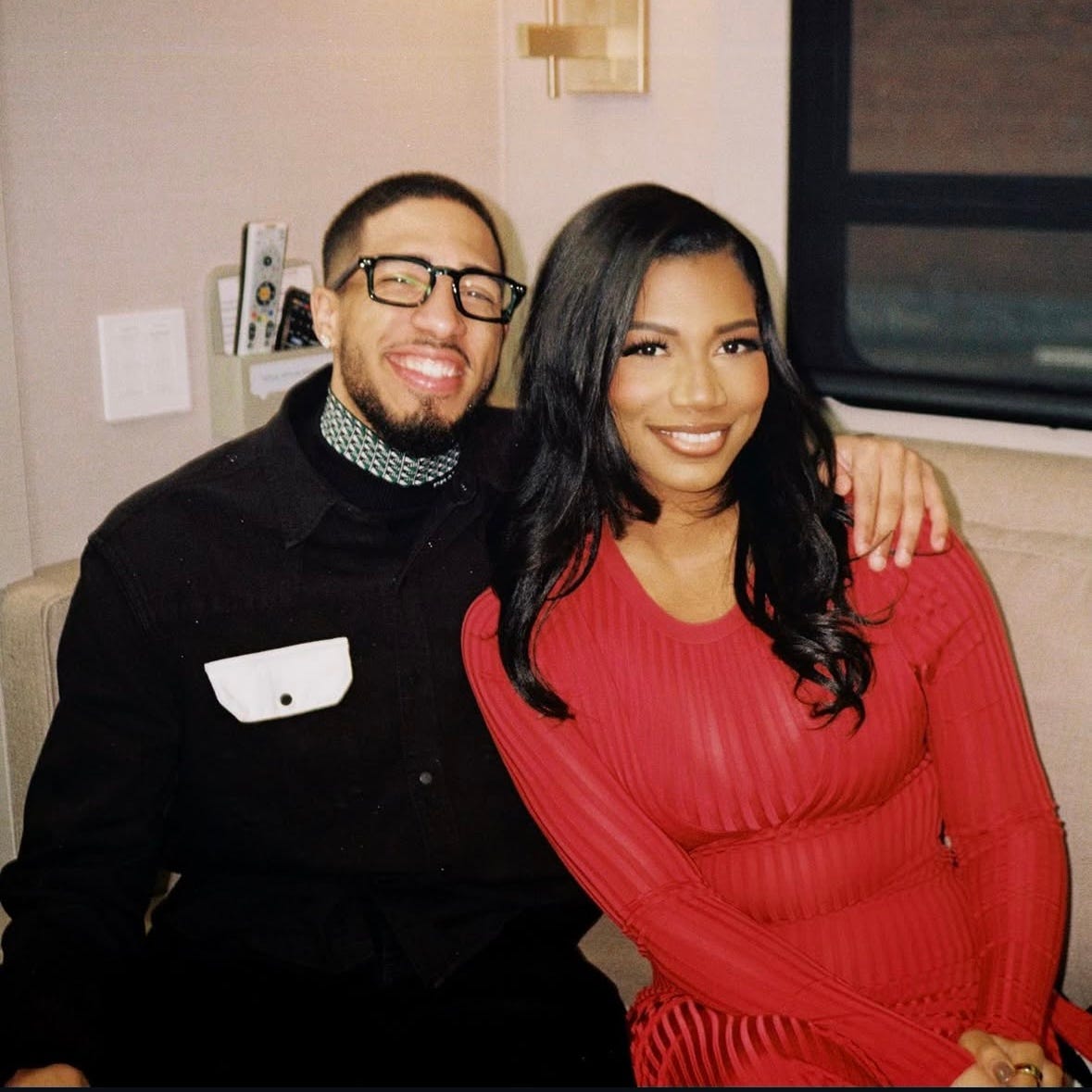
This is my first time wearing curly hair on Prime Video and I love it.
My natural hair was taking too much damage from constantly being pressed to blend into the straight wig, so we decided to switch it up and give it a real break. The front is my hair, and the top is a custom piece sewn into braids at the crown of my head.
A few times a week, I just flexi-rod the front and back of my hair, plus a couple sections of the wig, and it gives me the most natural, effortless look, without putting any heat on my hair at all.
If you’ve been thinking about giving your hair a reset or protecting it a little more, I can’t recommend this enough. It’s been such a game changer for me.

This was such a good read. Beautifully written.
I love when we’re reminded of the humanity behind our athletes (even the ones who took out my Knicks 😒). We expect them to be superhuman, yet rarely leave room for their real emotions. I admired that he chose not to force himself into a space & arena he wasn’t ready for. So often, we show up out of obligation, sacrificing our own well being in the process. Honoring himself, his relationship with that painful moment and speaking openly about it says so much.
I love the last line. We can’t control what happens but we do have say over how we return. So poignant.